



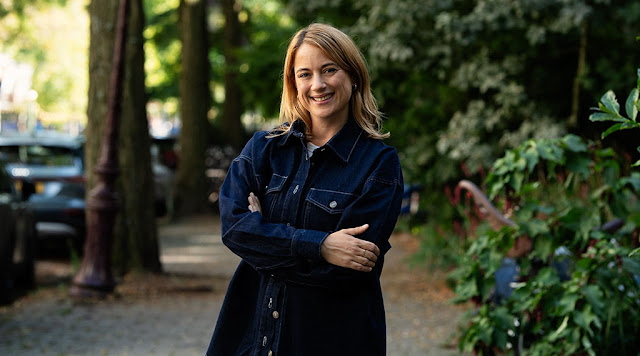

Wali Khan, Founder of Generation Bee Amsterdam, in Conversation with Lian Heinhuis, Deputy Mayor of Amsterdam
In this insightful conversation, Wali Khan, Founder of Generation Bee Amsterdam, speaks with Lian Heinhuis, Deputy Mayor of Amsterdam, about the city’s environmental priorities, pollinator protection, biodiversity, green spaces, sustainable development and the importance of reconnecting children and communities with nature.
How can a modern city grow while protecting the natural world that sustains it? Why are bees and other pollinators essential to urban life? And what role can citizens, schools and local communities play in creating a greener future?
A City Where People and Nature Coexist
Wali Khan: What does a typical working day look like for you as Deputy Mayor?
Lian Heinhuis: Much of my work involves consultation and meetings with different municipal departments that are working on related issues. At the same time, I try to spend a great deal of time out in the city, meeting residents and visiting different parts of Amsterdam.
I also make a point of visiting green spaces and playgrounds, especially places where we want to make a real impact. I believe it is important to see how our decisions at the government level translate into reality in neighborhoods and affect the daily lives of residents.
For me, maintaining that balance between policymaking and being out in the city is very important.
Amsterdam’s Environmental Priorities
Wali Khan: What are your current environmental priorities for the Municipality of Amsterdam?
Lian Heinhuis: Climate change remains one of our greatest challenges. Amsterdam has long wanted to be a frontrunner in tackling climate change, and we intend to continue that commitment.
We must take responsibility for our own emissions and reduce the contribution our city makes to climate change. Climate change is no longer simply a future threat. We are already experiencing its effects. That makes it essential for us to reduce our negative impact as much as possible.
At the same time, we need to think about how people and nature can coexist. Nature needs space within the city. This includes trees and plants, but also insects, birds and other wildlife.
Amsterdam is a densely populated city, and urban development can put pressure on natural habitats. One of our major challenges is therefore finding the right balance and ensuring that both people and nature have a place in the city.
Why Pollinators Matter
Wali Khan: Why are pollinators so important for Amsterdam?
Lian Heinhuis: Pollinators play a fundamental role in maintaining biodiversity. They enable many plants to reproduce, which is one of their most important functions.
By supporting plant reproduction, bees, butterflies and other pollinators contribute to biodiversity throughout the city and to the wider natural system within our urban environment.

Amsterdam as a Pollinator-Friendly City
Wali Khan: How does Amsterdam’s approach to pollinator protection fit within broader Dutch environmental policy?
Lian Heinhuis: Amsterdam has always attached great importance to being at the forefront of initiatives such as pollinator protection.
We have been actively monitoring bee and butterfly populations since 2000. For more than 26 years, we have consistently collected information about these populations, and we use that knowledge when making decisions about the future of the city.
We consciously take bees and butterflies into consideration when planning and developing Amsterdam.
These efforts reflect principles that are important throughout the Netherlands, but Amsterdam is also strongly committed to them independently. Even if other parts of the Netherlands were not doing this, we would still believe it was the right thing to do.
A New Standard for Urban Plants
Wali Khan: What concrete measures has the municipality taken to protect pollinators?
Lian Heinhuis: One of the most important steps we have taken is our decision to use only toxin-free plants in the city.
Plants placed in flowerbeds, parks and other public spaces must be toxin-free. We began implementing this approach at the start of this year because we want to create a healthier environment for nature.
But we also want to encourage others to follow our example.
The municipality is a major purchaser of plants. By creating demand for toxin-free plants, we hope plant nurseries will recognize that the market is changing and begin producing more plants in this way.
Our ambition is for this initiative to have an impact beyond Amsterdam and contribute to healthier conditions for pollinators and urban biodiversity more broadly.
We are also exploring the possibility of creating dedicated habitats for wild bees. Life can be challenging for wildlife in a densely populated city, so we want to investigate whether specific areas can be created where wild bees can live and thrive.
Housing, Green Space and the Challenge of Limited Land
Wali Khan: Amsterdam needs more housing, but it also needs parks and habitats for wildlife. How can the city balance these competing demands?
Lian Heinhuis: This is one of the biggest challenges facing any city. There is never enough space for everything we want and need to do.
Take energy, for example. I am looking at alternative ways of heating homes, including extracting heat from deep underground. But bringing that heat to the surface requires considerable space. You may need an area roughly the size of a football field.
At the same time, Amsterdam is facing a housing crisis and needs more homes. So, different priorities are competing for the same limited space.
That is why we have made clear agreements about protecting important green areas. There are parts of Amsterdam that are already beautiful and valuable green spaces, and we have decided that these areas should remain protected.
Without such agreements, we could easily find ourselves thinking that we could build on a small woodland or a park. Of course, we could build almost everywhere. But while that might help address one problem, it could create many others.
The challenge is therefore to constantly seek the right balance between housing, infrastructure, energy, nature and public space.
Are Pollinator Numbers Improving?
Wali Khan: The Netherlands launched a national strategy in 2018 to halt the decline of pollinators. What results are you seeing?
Lian Heinhuis: Amsterdam has developed its own plans and policies for pollinator protection.
The encouraging news is that we are seeing an increase in the number of pollinator species in Amsterdam. That is very positive in itself and shows that our efforts can make a difference.
The Power of Neighborhood Communities
Wali Khan: How can neighborhood initiatives complement government policy in promoting sustainability?
Lian Heinhuis: Neighborhood initiatives are extremely important. Residents themselves have a crucial role to play.
Across Amsterdam, you can find community gardens that are maintained by local residents. They are wonderful spaces, not only because they support nature and pollinators, but also because they bring people together.
They give residents the opportunity to work with plants, grow things and put their green thumbs to use. In that sense, they benefit both people and nature.
Amsterdam also has a long tradition of school gardens. We have had them for more than a century, and they are not available everywhere in the Netherlands.
School gardens are particularly important because they give every child the opportunity to experience nature, including children who live in large apartment buildings and may not have a garden at home.
They can develop an appreciation for plants, flowers and the natural world from an early age.
The municipality cannot achieve a green and healthy city by itself. It requires a joint effort from all Amsterdammers.
Fortunately, I see many people who genuinely care about greenery, flowers and plants. That gives me a lot of energy.
I believe we should find even more ways to involve residents and give them a genuine sense of ownership of their neighborhoods and local green spaces.
Giving Children Back Their Connection with Nature
Wali Khan: What do you hope Amsterdam will achieve in the coming years in the area of nature and sustainability?
Lian Heinhuis: I would love to see more neighborhood gardens and more school gardens. I believe school gardens should be a permanent part of the city.
They are closely connected to education, and they are something I personally, deeply care about as well.
I have two young children myself. We do not have a garden, but we visit the park very often. There, they can learn about flowers, plants and nature simply by being outdoors.
I believe every child in Amsterdam should have genuine access to green space close to home. Whether that is a neighborhood garden, a park, or ideally both, children should be able to experience nature as part of their everyday lives.
There is another issue that we also need to address: getting people outdoors.
Today, people spend much more time in front of screens, and many children and young people spend a great deal of time indoors.
As the Deputy Mayor responsible for outdoor play, I want to encourage children to get outside and experience the city again, preferably in green spaces.
Amsterdam has some wonderful examples. Natureluur in New West and Jeugdland in East are places where children can play while directly interacting with nature.
They do not simply learn about nature from a book or a screen. They experience it.
For me, these places are an essential part of a healthy, sustainable and livable city. I hope Amsterdam will continue to develop and expand such spaces in the years ahead.
https://technobizmagonline.blogspot.com/2026/04/wali-khan-ranked-among-finalists-in.html
A Greener Future Starts With Everyone
The conversation with Deputy Mayor Lian Heinhuis highlights an important message: building a sustainable city is not only about government policy. It is about creating a relationship between people, communities and nature.
From toxin-free plants and wild bee habitats to community gardens and school gardens, Amsterdam is exploring practical ways to make urban life more compatible with biodiversity.
The future of nature in our cities cannot be secured by governments alone. It requires residents, schools, businesses, communities and the younger generation to become active partners.
For Wali Khan and Generation Bee Amsterdam, the message is particularly relevant. Protecting pollinators means protecting biodiversity and ultimately protecting the quality of life of the people who share the city with them.
Nature Dialogue | TechnoBiz Magazine
Recorded by Team TechnoBiz
An edited interview feature exploring how cities, communities and citizens can work together to protect nature and build more sustainable urban environments.
