



BEE CONSERVATION | WALI KHAN
NOVEMBER 2026
Raising a Bee-Friendly Generation: Holland Bijen and Generation Bee on Bringing Bee Conservation into Dutch Schools
What began as an insightful conversation about biodiversity and bee conservation turned into an interesting plan on how to bring bees into Dutch classrooms! The Generation Bee team, Wali Khan, Founder; De Marion Kwoffie, Events Lead and Shayan Pascal, Content Lead had an interesting conversation with Majd Saleh, the founder of Holland Bijen. They spoke about the endangered native Dutch black bee, the threats facing pollinators, and how the two organisations can work together to get more children and the youth excited about protecting the precious Dutch bees.
Majd runs Holland Bijen, a beekeeping company based in Gouda with one clear mission: protect the native black honeybee and bring back local biodiversity. His bees keep busy in several ways:
- Pollination: hives delivered to farmers and greenhouse growers, timed to when crops bloom.
- Bee a Hero: companies adopt a hive on their own site, with team workshops and jars of their very own honey.
- Workshops: hands-on sessions for all ages, from office teams to school classes.
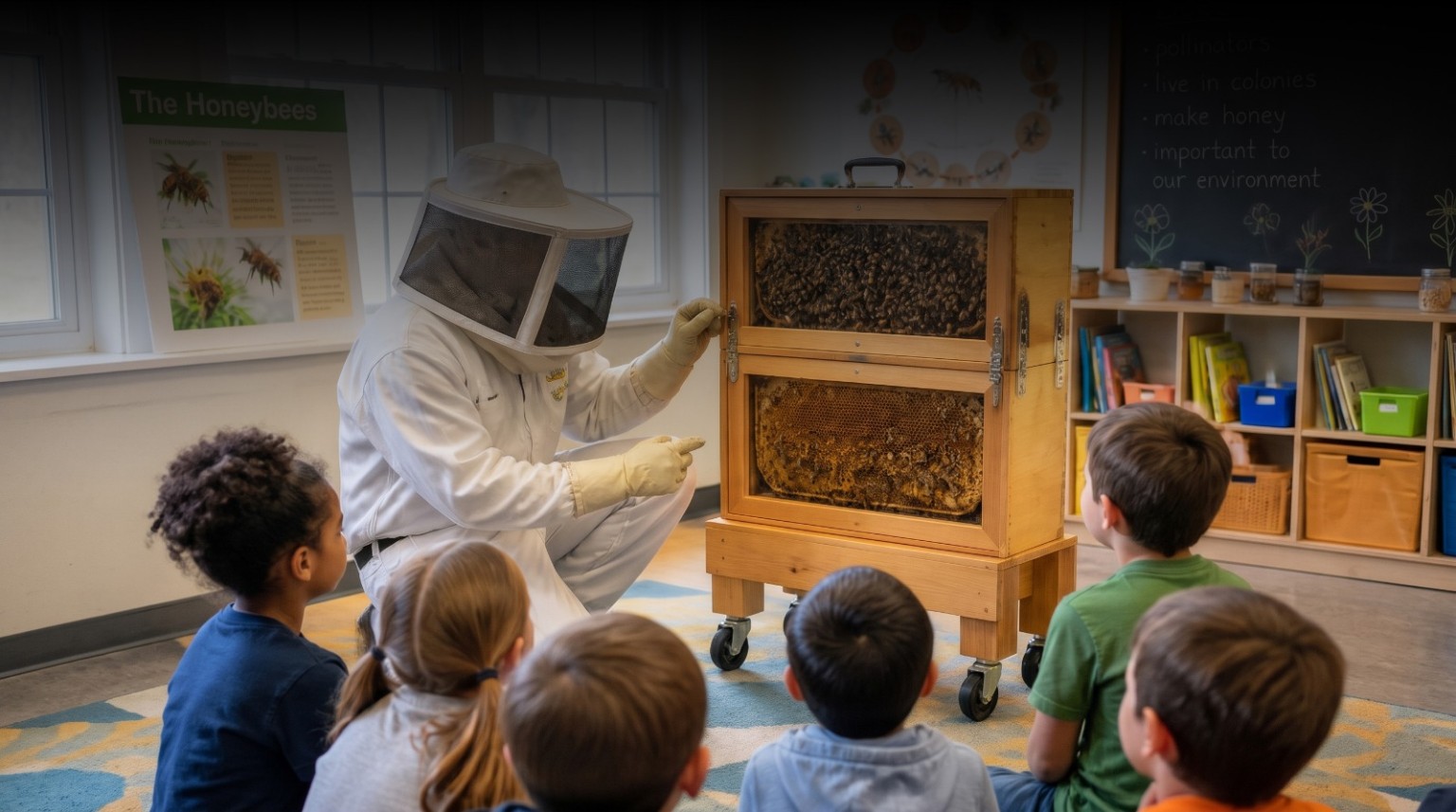
- The Educational Mobile Beehive: a wooden observation hive built for teaching, so people can watch a colony at work up close and safely.
When people think of bees, Majd said, they think of honey, and stop there. Very few people connect bees with biodiversity, even though that is where bees matter even more!
Why bees matter beyond honey
Bees are pollinators. As they move from flower to flower, they carry pollen that lets plants make fruit and seeds. Without them, Majd explained, our plates would look much emptier. Blueberries, apples, strawberries and many other fruits depend on pollinators, and so do the wild plants that feed birds and other animals. Honey, it turns out, is just the sweet bonus.
Protecting the Dutch native black bee
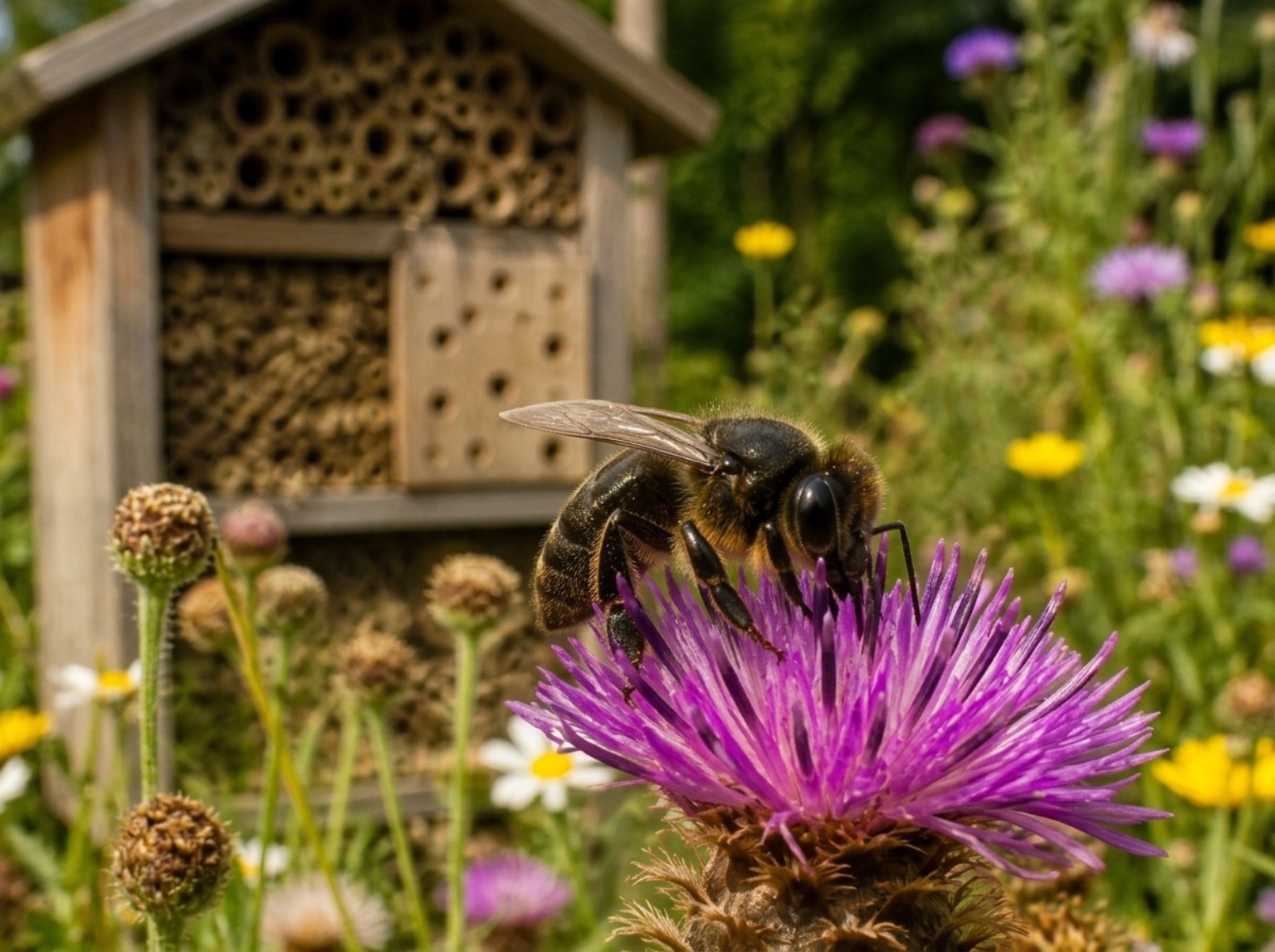
The Dutch native black bee (Apis mellifera mellifera) is a local hero that is currently in trouble in The Netherlands. Majd explained why this matters so much. Over thousands of years this native bee adapted to Dutch weather, Dutch landscapes and Dutch flowers, which makes it a strong, reliable pollinator of the local plants.
But the problem is that the Dutch native bee is now critically endangered. Many beekeepers keep imported, specially bred bees, and these mix with black bees until the native traits disappear. According to an estimate by Wageningen University, only about 150 of the country’s roughly 90,000 bee colonies are still black bees. The island of Texel still remains the main stronghold, where only black bees may be kept.
Majd talked about the much needed ways to keep the native black bee buzzing – keeping and breeding native colonies, avoiding imported bees nearby, and planting plenty of local flowers for them to feed on. That is exactly what Holland Bijen works on every day, he said.
Majd also explained how most people can’t tell a bee from a wasp. The easiest way to recognize it he said is that if you see it fuzzy and busy with flowers, it’s probably a bee. But if it is shiny, and after your lemonade, it’s probably a wasp!
The biggest threats facing Dutch bees
The Generation Bee team then asked Majd the big question: What are the greatest threats to our Dutch native bees? Majd explained there are several, but the biggest threats he can think of are:
- Climate change. This is a worldwide problem. Warmer winters, wet springs and unpredictable weather mix up the timing between when flowers bloom and when bees are ready to visit them.
- The Asian hornet. This invasive hornet hunts honeybees, often hovering outside a hive to catch bees as they fly in and out. First found in Zeeland in 2017, it has since spread north across much of the country. So if you spot one, feel free to take a photo and report it on Waarneming.nl!
- Parasites and diseases. The biggest is the Varroa mite, a tiny parasite that feeds on bees and spreads viruses. Together with bee viruses, it is one of the main causes of colonies dying over winter: 21.2% of Dutch honeybee colonies were lost in winter 2023–2024. Other unwelcome guests include Nosema, a gut parasite, and wax moths, which damage the honeycomb.
Bringing bee conservation into schools
After this came an even more interesting part of the conversation. Generation Bee asked if there are potential ways in which they could team up with Holland Bijen to teach children in schools about Bees and Biodiversity. Majd said this was an excellent idea, and together they sketched a plan to work on in the coming months:
- School workshops with the Mobile Beehive. Majd would bring his Educational Mobile Beehive to schools in Amsterdam and beyond. Children could watch a real colony up close, spot the queen and see bees at work, all safely behind glass. The workshops would be interactive and fun, made especially for primary school children.
- A school network. Majd was eager to use Generation Bee’s platform to build a communication network with schools, so that more classes could hear about and book these sessions.
- Apiary visits. When the weather allows, Majd offered to host school trips to his apiary, with proper protective suits for every visitor, of course!
- Working with DENISE. Majd said he was keen to collaborate with the students school, and would be happy to plan activities together with the beekeepers who are currently looking after DENISE’s bee hives.
Generation Bee’s work with young people
Majd then asked what Generation Bee has been up to lately in the context of bee conservation. Wali explained, with much enthusiasm, how Generation Bee ran summer workshops at the Terragon Nature Lab in Amsterdam. There, children aged 4 to 10 learned about bees through games, stories and short video clips that kept even the youngest ones buzzing with so many questions!
Wali also told Majd about the interactive seed planting sessions Generation Bee held at Terragon where the kids got their hands dirty sowing seeds of flowers that bees love. Every seed was a small gift for the precious pollinators.
Majd was delighted. He encouraged them to continue their efforts and said that he was pleased to see youth-led initiatives like Generation Bee engage in these sort of biodiversity campaigns. He emphasized that organising fun hands-on activities for younger kids to learn about bee conservation is very important to get the conversation started at a very young age.
“Majd invited the Generation Bee team to visit his apiary, to meet his bees and plan to work on some projects together.”
The unpredictable Dutch weather, however, played havoc with their plans, and the visit already had to be rescheduled twice. Fingers crossed, the team hopes to finally pull on their bee suits next week!
One thing that is almost certain though, is that when a local beekeeper and a youth-led bee initiative join forces, many kids and youth are going to fall in love with bees – way beyond the honey they have otherwise known the bees for!
