



JULY 2026
Teen Neuroscientists in the Spotlight
Dutch National Brain Olympiad Finalists at the Dutch Neuroscience Meeting 2026
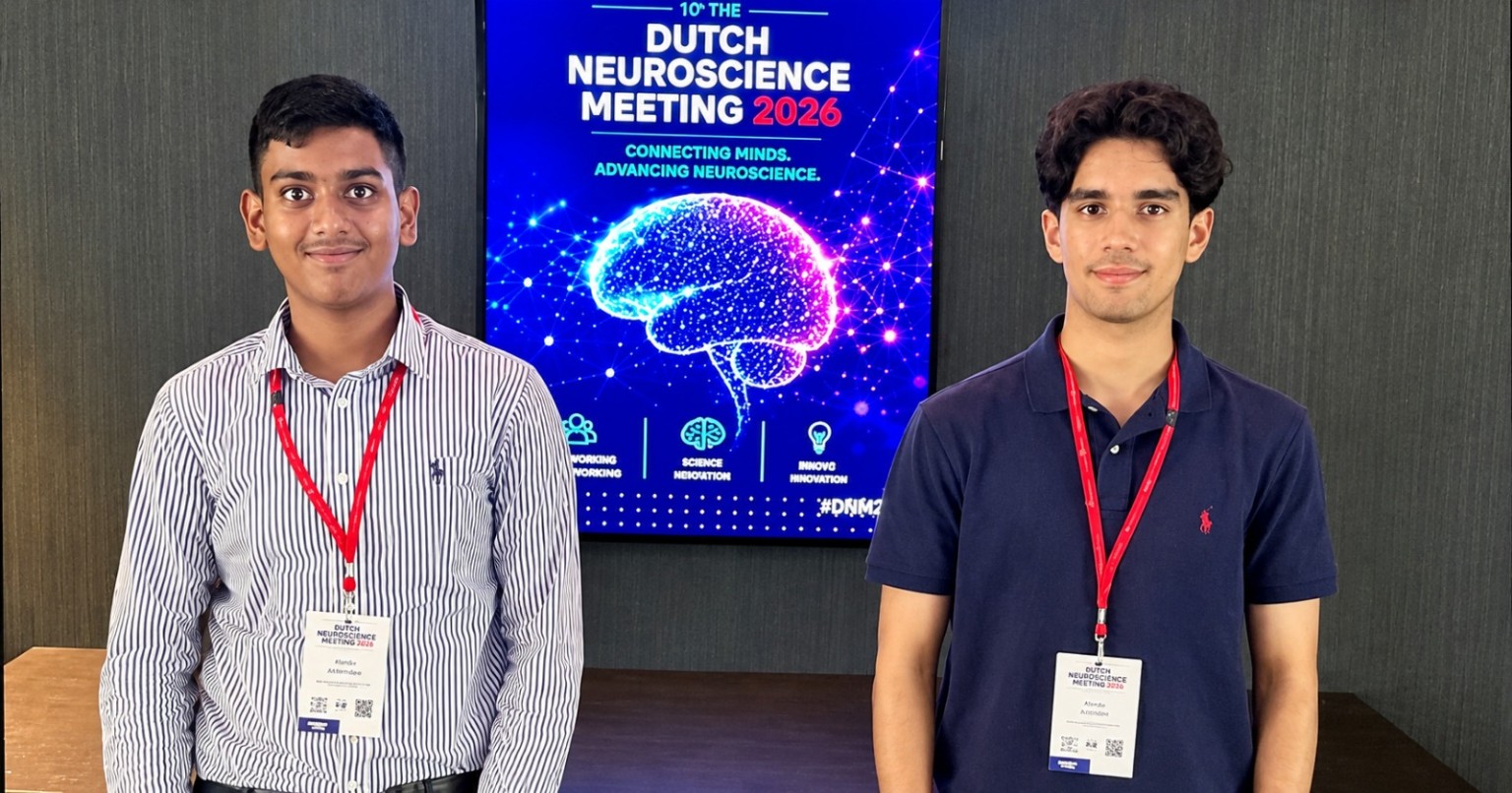
Two finalists from the Dutch National Brain Olympiad, Wali Khan and Luke Solomon, represented the Hersenolympiade Foundation at the Dutch Neuroscience Meeting 2026 (DNM 26), held in Tiel on 25–26 June 2026.
The Brain Olympiad, part of the international Brain Bee held in more than 50 countries, challenges secondary school students on neuroscience and AI, brain anatomy and the diagnosis of brain disorders.
Wali is an International Baccalaureate student at De Nieuwe Internationale School Esprit (DENISE) Amsterdam, and Luke is a VWO student at Edith Stein College in The Hague. As finalists, both were invited by the foundation to attend as student advocates. It was a wonderful opportunity for these young brain enthusiasts to meet leading neuroscientists and explore the field further.
DNM 26 brought together researchers, clinicians and students from neuroscience, neurology, psychiatry, psychology and neuroendocrinology. The programme combined three keynote lectures, more than 30 parallel sessions and two busy poster sessions, with plenty of room for informal conversation between senior and early-career scientists.
Wali and Luke were thrilled to be part of the experience. They attended talks, explored the poster halls and spoke with scientists working at the leading edge of brain research. The highlight came at the closing ceremony, when the two were invited to take centre stage and were introduced as aspiring neuroscientists, an unforgettable moment for them both.
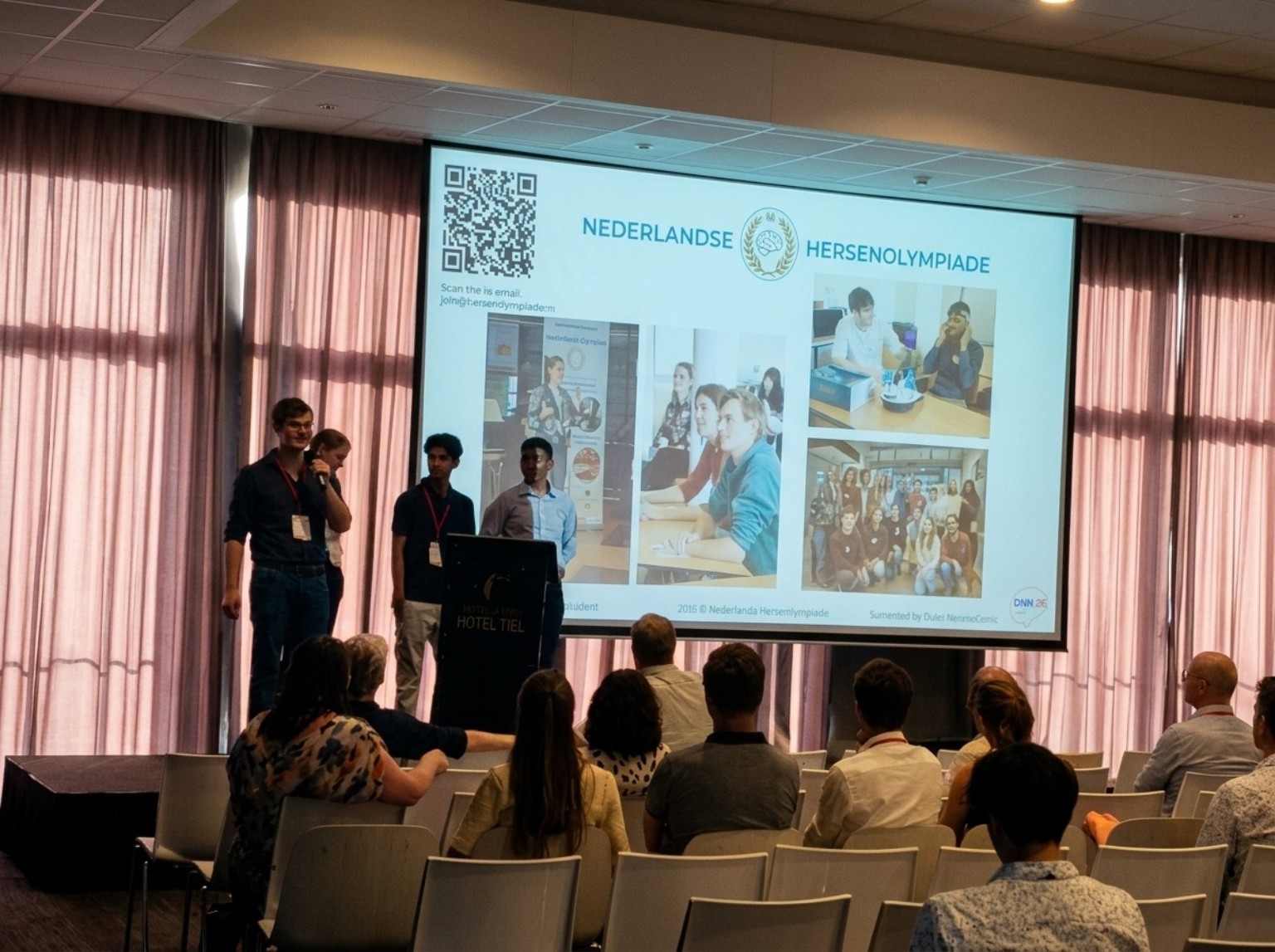
The programme ranged from single molecules to whole-brain behaviour. Some of the key takeaways for Wali and Luke were:
Forgetting can be good for you.
In a keynote on adaptive forgetting, Cambridge neuroscientist Michael Anderson explored how the brain’s ability to suppress unwanted memories supports mental health, and how that ability might be trained.
The brain is more than neurons.
Session after session showed that glial cells, such as astrocytes and microglia, actively shape synapses, learning and memory. They also play a role in diseases ranging from Alzheimer’s to brain tumours.
Brains are inspiring the next generation of computers.
Sessions on neuromorphic computing and computational neuroscience showed how brain research and AI increasingly learn from each other.
From genes to treatments.
Researchers presented progress on antisense oligonucleotide (ASO) therapies, which target faulty genetic messages and offer new hope to patients with rare neurodevelopmental disorders.
Lifestyle and environment shape brain health.
Talks on exercise, diet, sleep, air pollution and even micro- and nanoplastics showed how everyday factors can influence the ageing brain and the risk of dementia.
Great science is a team effort across cultures.
A keynote on intercultural communication was a reminder that modern neuroscience relies on collaboration between people from many countries and disciplines.
Wali and Luke’s success reflects both academic excellence and a genuine fascination with the brain’s many mysteries. That curiosity has already led them further: the two are designing their own platforms to share what they have learned, through fun and interactive activities, with younger students at their schools and in their local communities.
Their story is a reminder that the future of neuroscience is already taking shape in classrooms, in competitions, and in the minds of students ready to push the boundaries of discovery.
